

Unlocking Social Learning: The Power of Play for Autistic Children
Play can be a powerful way for children to explore the world, express themselves and connect with others. But autistic children play in many different ways, and there is no single way that play should look for every child.
Some children may prefer playing alone, repeat actions with a favourite toy or focus deeply on a particular sensory experience. Others may enjoy playing with others, joining simple games, taking turns or engaging in imaginative play. These differences are an important part of understanding autism and play.
For parents, the goal isn't to make every child play in the same way. It is to create opportunities for safe, enjoyable play that match the child's interests, abilities and comfort level.
So, how can play create opportunities for connection, communication and social learning? Let's explore.
Understanding Autism and Play
One common misconception about autistic children play is that there is a single "right" way to play.
Autistic children may engage in repetitive play, prefer solitary activities or become deeply interested in specific toys and activities. Repeating an action, lining up objects or exploring the same toy repeatedly can be meaningful to a child. It can provide opportunities to explore movement, patterns, textures or cause and effect.
This is why understanding autism and play starts with observation.
Instead of immediately changing how a child plays, caregivers can ask:
- What does the child enjoy?
- What sensory experiences do they seek or avoid?
- Which toys hold their attention?
- How do they communicate during play?
- When do they seem most comfortable engaging with another person?
These observations can help caregivers create play experiences that feel inviting rather than demanding.
Moving Beyond the Myth of "Playing the Right Way"
Play doesn't have to look like a traditional game to be valuable.
A child spinning a wheel, repeatedly dropping an object or arranging toys in a particular order may be exploring movement, sound, texture or patterns. These experiences can become starting points for interaction when a caregiver joins without immediately taking control of the activity.
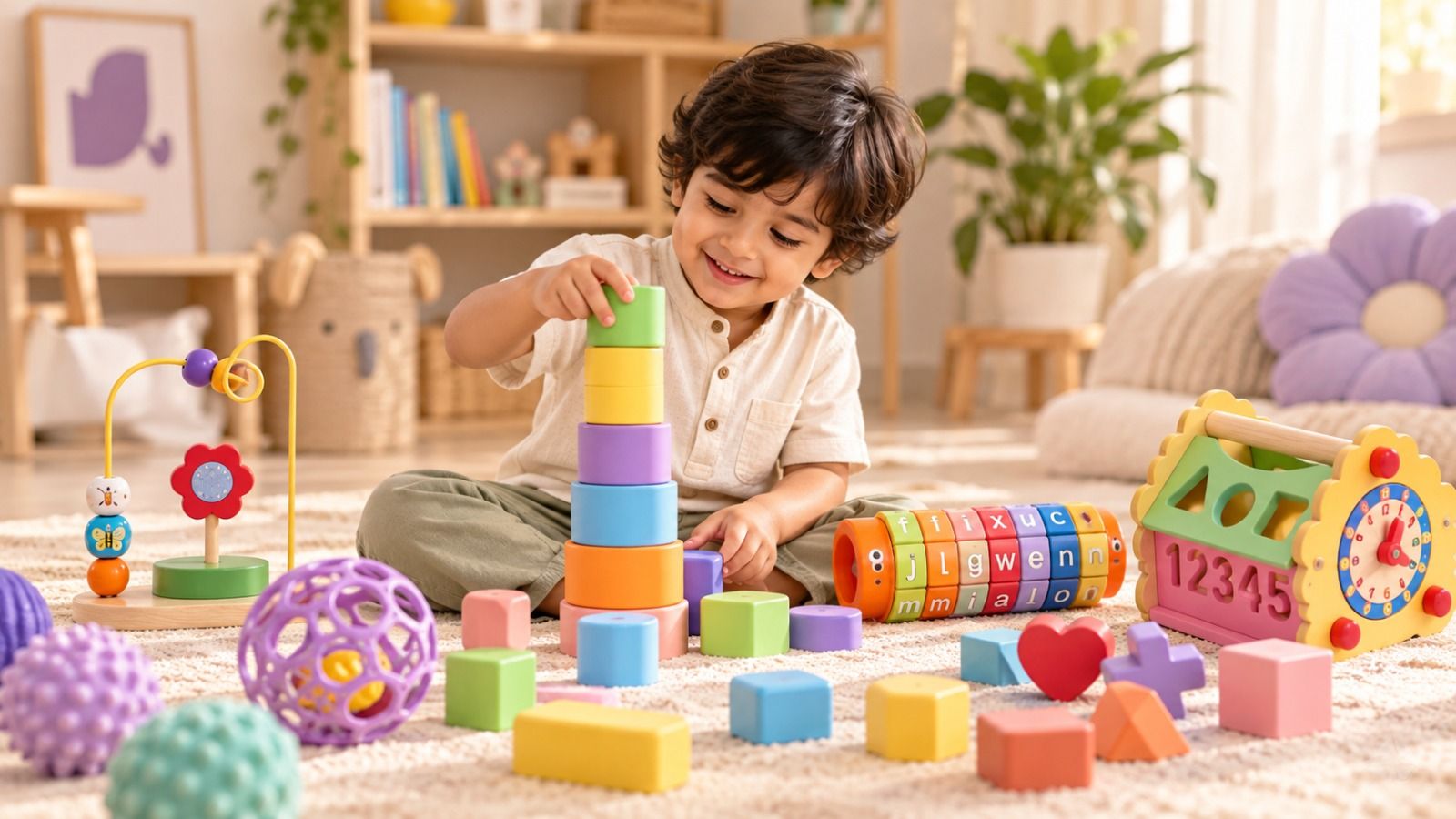
For example, if a child enjoys rolling cars, a caregiver could sit nearby and roll another car alongside them. If the child enjoys stacking blocks, the caregiver could build alongside them.
The aim isn't to replace a child's preferred play. It is to gently expand the possibilities around it.
The Role of Parallel Play
Not every child wants to play directly with another child, and that's okay.
Parallel play happens when children play alongside one another, often using similar toys or doing similar activities without directly interacting. For autistic children, this can provide a comfortable way to share space and an activity before moving towards more interactive forms of play.
For example, two children might sit next to each other and build separate towers with blocks. They aren't necessarily building together, but they are sharing a space and activity.
Parents and caregivers can use these moments to introduce small opportunities for connection:
- Sitting alongside the child
- Copying their actions
- Offering a similar toy
- Commenting on what they're doing
- Taking turns with a preferred object
- Following the child's lead
These small interactions can create opportunities to practise attention, communication and turn-taking.
The Raising Children Network's guide to play with autistic children also discusses parallel play and sensory or exploratory activities as ways children can engage in play alongside others.
Sensory Play for Autistic Kids
Sensory experiences can be an important part of play for many autistic children.
Sensory play for autistic kids can involve textures, movement, sounds, colours, water, sand or other hands-on experiences. The right activity depends on the individual child's preferences and sensory needs.
Simple activities such as drawing, water play, sand play, musical instruments or tactile toys can provide opportunities for exploration.
But there is no universal sensory activity that works for every child. What feels enjoyable to one child may feel overwhelming to another.
That's why caregivers should pay attention to the child's response. If an activity feels overwhelming, reduce the intensity or move to something more comfortable. If the child shows interest, build on it.
The goal is not to make a child tolerate a particular sensory experience. It is to create opportunities for comfortable exploration.
Families looking for different ways to explore sensory play can browse EleFant's sensory toys for kids, where the collection includes hands-on toys and activities across different age groups.
How Play Can Build Social and Communication Skills
Play creates natural opportunities to practise social and communication skills without making every interaction feel like a lesson.
Simple play can create opportunities to practise:
Taking Turns
Rolling a ball back and forth or taking turns adding blocks to a tower can introduce the idea of "my turn" and "your turn."
Sharing Attention
When a caregiver follows the child's interest and responds to what they are doing, play can create opportunities for shared attention.
Communication
A toy can give children a reason to request, point, gesture, name objects or communicate what they want.
Imitation
Copying a child's actions can show that their activity is being noticed while encouraging them to notice and imitate another person's actions.
Cooperative Play
As children become comfortable with shared activities, simple games can introduce turn-taking, shared goals and cooperation.
This is where social skills autism toys can become useful—not because a toy automatically teaches social skills, but because it can create opportunities for caregivers and children to practise them together.
Choosing Toys That Support Social Learning
When choosing social skills autism toys, caregivers don't necessarily need toys marketed specifically for autism.
A simple ball, puzzle, building set, musical toy or pretend-play set can become an opportunity for social interaction when it matches the child's interests and abilities.
Look for toys that offer opportunities to:
- Take turns
- Build together
- Solve problems
- Copy actions
- Make choices
- Communicate requests
- Explore cause and effect
- Create shared attention
The most useful toy is often one that a child actually wants to engage with.
the EleFant toy catalogue offers different categories of toys, including educational, sensory, fine-motor and special-needs development options, giving caregivers more choices to explore based on a child's interests and stage.
The focus should be less on finding a "special" toy and more on finding a toy that makes interaction feel natural.
Where Play Therapy for Autism Fits In
Play therapy for autism uses play as a context for supporting goals such as communication, social interaction and emotional expression. Different approaches can include child-led play, guided activities, pretend play and turn-taking games.
The AB Spectrum guide to play therapy for autism explores different ways play can be incorporated into support for autistic children.
Professional play therapy for autism is different from simply playing with toys at home. A therapist may use specific activities based on an individual child's needs and goals.
At home, caregivers don't need to turn every play session into therapy.
Everyday play can simply be an opportunity to connect, follow the child's interests and introduce small opportunities for communication and interaction.
If a child is receiving therapy, caregivers can also discuss suitable play activities with their child's therapist.
Let the Child Lead the Play
One of the simplest ways to make play more comfortable is to start with what the child already enjoys.
If they love trains, start with trains.
If they enjoy puzzles, sit beside them and solve one together.
If they love sensory activities, explore those experiences alongside them.
Child-led play gives children more control over the interaction while allowing caregivers to follow their interests.
The balance is simple:
Follow first. Then gently expand.
A caregiver might begin by copying what the child is doing, then introduce a small variation. If the child is rolling a car back and forth, the caregiver might join in. If the child is building a tower, they might add one block and wait for the child's response.
These small moments can make interaction feel natural rather than forced.
Choosing Toys Without Creating More Clutter
Finding the right toys for an autistic child can take some experimentation. A toy that works wonderfully for one child may hold little interest for another.
That can make buying toys for autistic children expensive—and leave families with shelves full of toys that aren't being used.
A toy library offers another approach.
With the EleFant Toy Library, families can explore different types of play without needing to permanently buy every toy they want to try.
From sensory and educational activities to building, movement and interactive play, having access to different types of toys can give caregivers more opportunities to discover what their child enjoys.
This can be especially useful when families want to explore sensory play for autistic kids or introduce new forms of play without committing to every toy long-term.
More Variety, Less Commitment
Every child has different interests, preferences and ways of engaging with play.
That means choosing toys can sometimes involve trial and error.
Instead of buying several toys and hoping they work, families can explore different options and pay attention to what their child naturally gravitates towards.
A rotating toy library can make that experimentation easier. Families can introduce new toys as interests change while avoiding the need to permanently store every toy they try.
The goal isn't to have more toys. It's to have more opportunities for meaningful play.
Play, Explore, Connect
There is no single way that autistic children play, and there doesn't need to be.
For some children, social learning may begin with playing alongside someone else. For another, it may start with a shared sensory activity, a favourite toy or a simple turn-taking game.
What matters is creating opportunities that respect the child's interests and comfort while gently opening the door to connection.
Understanding autism and play means looking beyond what play "should" look like and paying attention to what helps each child feel engaged, comfortable and ready to explore.
With supportive caregivers, the right environment and opportunities to try different kinds of play, toys can become more than things to keep children occupied. They can become tools for exploration, communication and connection.
Frequently Asked Questions About Autism and Play
How do autistic children play?
There is no single way autistic children play. Some children may prefer solitary or repetitive play, while others enjoy parallel, cooperative or imaginative play. Their interests and play styles can also change over time.
What is play therapy for autism?
Play therapy for autism uses play-based activities as a context for supporting goals such as communication, social interaction and emotional expression. Different approaches may be child-led or more structured.
What is sensory play for autistic kids?
Sensory play for autistic kids involves activities that engage senses such as touch, sight, sound or movement. Activities should be adapted to the individual child's preferences and sensory needs.
Can toys help autistic children develop social skills?
Toys themselves don't teach social skills automatically. However, toys can create opportunities for interaction, turn-taking, shared attention, communication and cooperative play when caregivers or peers participate.
What are good social skills for autistic toys?
There is no single category of toys that works for every autistic child. Building toys, puzzles, balls, pretend-play sets, musical toys and sensory activities can all create opportunities for social interaction depending on the child's interests and abilities.
Should parents buy toys specifically marketed for autism?
Not necessarily. The most useful toy is often one that matches the child's interests, abilities and sensory preferences. Caregivers can look beyond autism-specific labels and focus on how the child engages with the toy.