
Best Educational Toys for Preschoolers: A Play-Based Learning Guide
Ages three to five are some of the busiest, brightest years in a child's life. Every wobbly tower, every pretend tea party and every jigsaw finished is quietly building language, focus and problem-solving skills. That is why the toys you keep within reach matter so much. This guide walks you through the best educational toys for preschoolers, grouped by what each one actually teaches, so you can choose with confidence instead of guesswork.
What preschoolers learn through structured and free play
Between three and five, children move from simple exploration into real imagination. Structured play - a guided puzzle, a shape-sorting game - builds patience and teaches a child to follow simple rules. Free play - dressing up, building a farm, cooking a pretend meal - builds language, empathy and creativity. Both matter, and a healthy toy shelf holds a little of each.
The catch is that preschoolers grow quickly. A toy that delighted your three-year-old can feel babyish by four. So the real question is not only which toys to buy, but how to keep swapping in fresh challenges as your child moves forward.
How to choose educational toys by your child's stage
Preschoolers sit across a wide range of development, so match the toy to the stage rather than the birthday candle.
For 1-3 years, look for stacking, threading, chunky puzzles and first pretend sets. These build grip, hand-eye coordination and an early sense of cause and effect.
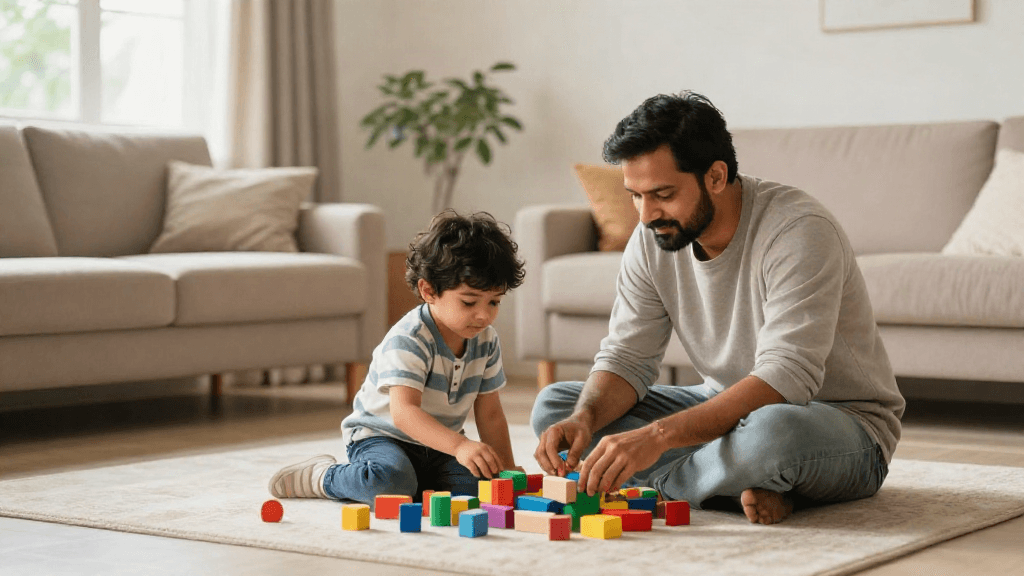
For 3-5 years, add early letters and numbers, simple board games, building blocks and open-ended pretend play. These stretch imagination, turn-taking and early reasoning.
For 5-8 years, step up to magnetic tiles, beginner STEM kits, strategy games and craft sets that reward planning, patience and finishing what you start.
Best educational toys for preschoolers, by learning goal
Language and literacy
Toys that invite talking do more for early reading than flash cards. Alphabet puzzles, story cubes and picture games give your child words to reach for, and narrating pretend play quietly builds vocabulary and sentence structure.
Maths, logic and problem-solving
Sorting sets, counting bears, pattern blocks and simple board games introduce numbers and sequencing without pressure. Matching and sorting are the quiet foundations of maths, and they feel like a game rather than a lesson.
Fine motor and sensory skills
Play dough, threading beads, lacing cards and grip-friendly building toys strengthen the small muscles in little hands. Strong fine motor control is what later makes holding a pencil feel effortless. Our Roll the Ball toy is a gentle, playful way to build these skills while your child discovers motion.
Imagination and pretend play
A wooden picnic set or a child-sized kitchen turns an ordinary afternoon into a restaurant, a market or a family trip. Pretend play is where children practise empathy, negotiation and storytelling. The Supreme Kitchen Set and It's a Picnic are two favourites that grow with your child's imagination.
STEM and building
Magnetic tiles, construction sets and simple engineering toys teach balance, symmetry and trial and error. Building something that stands is a small, powerful lesson in persistence.
Why toy rotation keeps learning fresh
Children do not outgrow learning - they outgrow toys. When the same box sits on the shelf for months, interest fades and play gets repetitive. Rotating toys, so that some rest while others come back, keeps novelty high and makes familiar toys feel new again. It also keeps your home calmer and less cluttered.
How a toy library keeps preschool learning fresh every month
This is exactly where a toy library helps. Instead of buying every type of toy your child grows into, a subscription gives you access to over 1,000 premium, sanitised toys and books, with unlimited swaps as your child's interests change. Toys arrive at your doorstep, are collected on schedule, and every item is checked, cleaned and safety-tested before it reaches your home.
Because one membership covers a wide range of different types of toys, you can follow your child's curiosity wherever it leads - a week of trains, a month of puzzles, then a season of pretend play - without a single cupboard overflowing. Accidental damage is covered under Toy care++, so you can relax and let your child play properly.
Frequently asked questions
Are educational toys worth it for preschoolers?
Yes - when they suit your child's stage. The value is not in the price tag but in how well a toy fits what your child is ready to learn. A simple, open-ended toy often teaches more than a complicated one.
How many toys should a preschooler have?
Fewer than most homes hold. A small, rotating selection keeps attention higher than a crowded shelf. Toy subscriptions naturally solve this, because toys come and go rather than pile up.
How do I keep toys hygienic when sharing or swapping?
Look for a service that sanitises and safety-checks every toy between uses. At the EleFant, each item is cleaned and inspected before it is delivered to the next family.
Final thoughts
The best educational toys for preschoolers are the ones that match where your child is right now and leave room to grow. Structured play builds skills, free play builds imagination, and regular swaps keep both alive. You do not need to buy everything to give your child everything - you simply need the right toys at the right time.
Ready to build a fresher toy shelf without the clutter? Explore our plans and pricing and subscribe to the EleFant toy library today.