
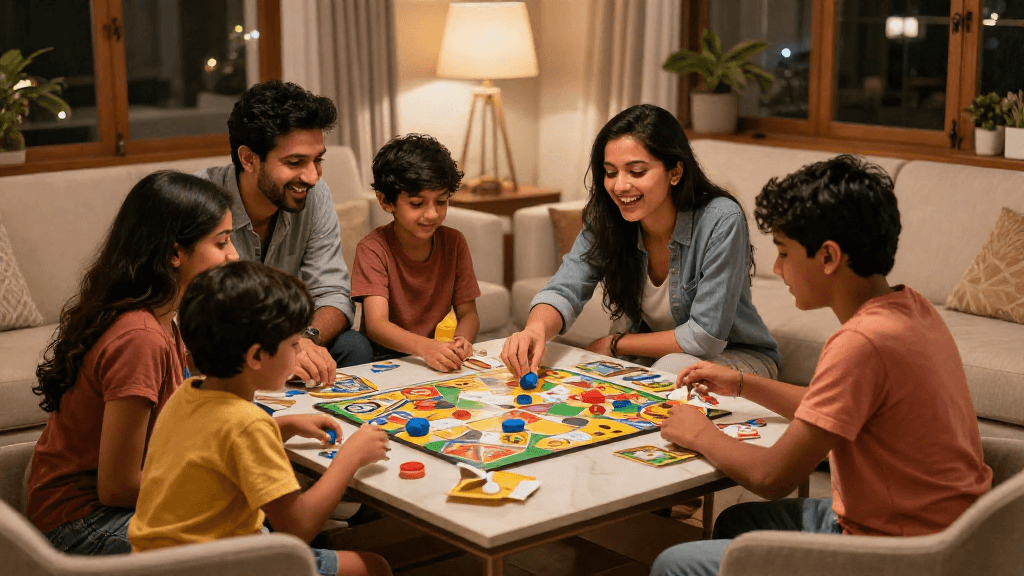
Best Board Games for Family Game Night in India
Some of the warmest memories in an Indian home are made around a low table, a bowl of snacks and a board game that everyone argues over in the friendliest way. Family game night is a simple, screen-free ritual that fits neatly into busy weeks, and it works for children as young as toddlers right up to teenagers. If you have been searching for the best family board games in India, this guide will help you pick the right ones for your child's age and build a game-night shelf you can keep refreshing.
Why Board Games Are Worth the Table Space
Board games are a quiet kind of magic. They teach turn-taking, patience and how to lose gracefully, and they slip in counting, matching, planning and problem-solving without a single flashcard. For parents, they offer something just as valuable: twenty focused minutes where everyone is in the same room, looking at each other instead of a screen. A family game tradition is one of the easiest ways to make shared play a regular habit. Games also grow with your child. A simple matching game for a three-year-old becomes a strategy challenge by the time they turn eight, so the same shelf can serve the whole family for years.
How to Choose the Right Board Game by Age
0–1 Years
Babies are not ready for rules, but they are ready for play. Choose chunky, rounded pieces they can hold, stack, drop and mouth safely, and treat the game as a back-and-forth round of copy-and-repeat. Soft edges, non-toxic finishes and generously sized pieces matter more than the theme at this stage.
1–3 Years
Toddlers love cause and effect. First games should carry one clear idea: roll the ball, match the picture, pop the piece in. Turn-taking is the real skill here, so keep rounds short and let them win often.
3–5 Years
Pre-schoolers can follow two or three rules and they adore colour and characters. Matching games, memory games and simple dice-and-move boards are perfect. This is also the age when losing can feel enormous, so praise effort loudly and the win quietly.
5–8 Years
The early school years are the golden window for family games. Children can read simple words, count, plan ahead and negotiate. Classic dice games, tile games and card games with light strategy keep everyone interested, and a round that lasts ten to fifteen minutes suits short attention spans.
8–12 Years
Older children want challenge and a little competition. Strategy games, quiz games and anything with building, numbers or logic will hold their attention. Let them teach the rules to a younger sibling; it is a huge confidence boost and it keeps the game night going.
Top Board Game Picks for Indian Families
Here are the kinds of games that work hardest on an Indian family game-night table:
- Shut the Box: a classic dice-and-numbers game that is easy to teach and genuinely fun for adults too, which makes it a favourite for mixed-age groups.
- Magnetic tile building sets: not a board game in the strict sense, but brilliant for cooperative play, spatial thinking and calm focus after a long day.
- Memory and matching games: simple, portable and perfect for the 3–5 Years bracket, with picture versions that work well before reading begins.
- Dice-and-move classic boards: reliable, quick to set up and endlessly replayable for the 5–8 Years group.
- Card games with light strategy: compact, low-mess and ideal for 8–12 Years, especially when the whole family plays together.
There are many different types of toys that suit game night, so you do not have to limit yourself to traditional boards. A roll-and-catch set, a wooden picnic play set or a stack of picture cards can all become part of the ritual. The best pick is simply the one your child asks for again next week.
How to Build a Rotating Family Game-Night Shelf
Children outgrow games fast, and buying every new title adds clutter, cost and guilt. A smarter approach is a rotating shelf: keep a small handful of games in play, then swap them out when interest fades. Rotating keeps the night fresh, gives younger siblings a chance to catch up, and means a game only has to be right for a few months rather than for years.
A toy library subscription makes this rotation effortless. Instead of storing every game you might one day want, you keep a small home collection and refresh it regularly, with toys and games delivered to your door and collected when you are done. It is a clutter-free, budget-friendly way to match your child's changing interests without guesswork.
Make It a Weekly Ritual
Pick a fixed evening so nobody has to negotiate for it. Keep the table snack-friendly and phones in another room. Let a different child choose the game each week, and stop while everyone is still having fun rather than when tempers fray. Thirty relaxed minutes, repeated weekly, builds a habit that children remember long after the games are returned.
Final Thoughts
The best family board games in India are not the ones with the glossiest box. They are the ones your family actually plays, at an age your child is ready for, on a table everyone can reach. Start with one game that suits your child's stage, build a small rotating shelf, and let the weekly game night do the rest. When you are ready to keep the rotation going without the clutter, subscribe to the EleFant and let fresh toys and games arrive at your doorstep.