



Quick Summary
- Tantrums are normal– They reflect a developing brain, not bad behaviour or manipulation.
- Calm Down Corner purpose– A safe, soothing space for emotional regulation, not punishment.
- Why it works– Helps reset the nervous system, teaches coping skills, and reduces power struggles.
- What to include: Comfort items, emotional tools, and simple calming activities.
- Consistency matters– Introduce it calmly, avoid using it as discipline, and allow time for results.
How to create a “Calm Down Corner” for child tantrums
Tantrums are among the most maddening aspects of parenthood. Whether your toddler is having a meltdown because you cut their sandwich “wrong” or your pre-schooler collapses into tears over leaving the park, temper tantrums are totally normal. They are not signs of “bad behaviour”, poor parenting or a difficult child. They are a natural result of a developing brain that is still learning how to handle big feelings.
What many parents don’t understand is the child is NOT trying to manipulate during a tantrum. Overwhelmed is an understatement for them in most cases. Their nerves are flooded, their reasoning is temporarily offline, and they simply do not have the tools to calm themselves.
This is where a Calm Down Corner can make a powerful difference.
This space isn’t a time-out or a punishment space. It’s a safe, calming place that aims to help children calm down, reset their nervous system, and start learning self-soothing skills. When created thoughtfully, it becomes a trusted refuge rather than a dreaded spot.
So, let’s explore how to design one that actually works.
What is a Calm Down Corner?
A Calm Down Corner is a safe, comfortable place in your home where children go to settle feelings of anger, frustration and sadness. Consider it as an emotional regulation zone, not a disciplinary area.
Unlike time-outs, which are typically used to punish or stop behaviour, a Calm Down corner is designed for:
- Emotional safety
- Comfort
- Self-regulation
- Recovery
Here’s the message it sends to your child instead:
Not “Go away until you behave,” but “It’s okay to feel upset. Let’s help your body relax.”
Children experience emotions physically. They feel their heart races, muscles tense, and breathing become irregular. A soothing space actually helps them calm down these reactions.
Why calm down corners work?
Young children are primarily driven by their emotional brain. During distress, their fight or fight-response activates. Logic, reasoning, and even instructions don’t quite work because the thinking brain (prefrontal cortex) is temporarily overpowered.
A calm down corner works because it:
Supports emotional development
Children gradually learn that feelings rise and fall. They experience calming strategies repeatedly.
Teaches coping skills
They don’t stuff their emotions; they manage them.
Reduces power struggles
Parents stop battling behaviour and start guiding regulation.
Builds independence
Over time, children begin using the space voluntarily.
Most importantly, it helps children connect emotions to solutions instead of shame.
Signs your child may benefit from one
Many kids can benefit from a Calm Down Corner and children who have frequent tantrums or other types of emotional melt downs especially need them. If your child has difficulty calming themselves when upset, gets overstimulated quickly from noise, activity or the randomness of a social situation, or can’t handle transitions that take place in their daily life, having a space dedicated to regulation will provide much support.
It’s also particularly useful for children who react more strongly than others when things don’t go their way or when there are disappointing changes to their usual routine. Importantly, even children who are generally considered “easy going” may need a calming space during stressful phases, developmental leaps, or periods of change.
Choosing the right location
Location matters more than parents think. The Calm Down Corner is a safe place, not isolating.
Look for a space that is:
- Quiet but not hidden away
- Safe and clutter-free
- Low in stimulation
- Easily accessible
Good options include:
- A bedroom corner
- A small nook in the living room
- A section of the playroom
- A cosy hallway alcove
Avoid placing it in areas associated with punishment or conflict.
Essential items for a Calm Down Corner
You don’t need expensive tools. Sometimes the simplest items are also the most useful. The goal is to make a space feel safe and relaxing.
Comfort and sensory support
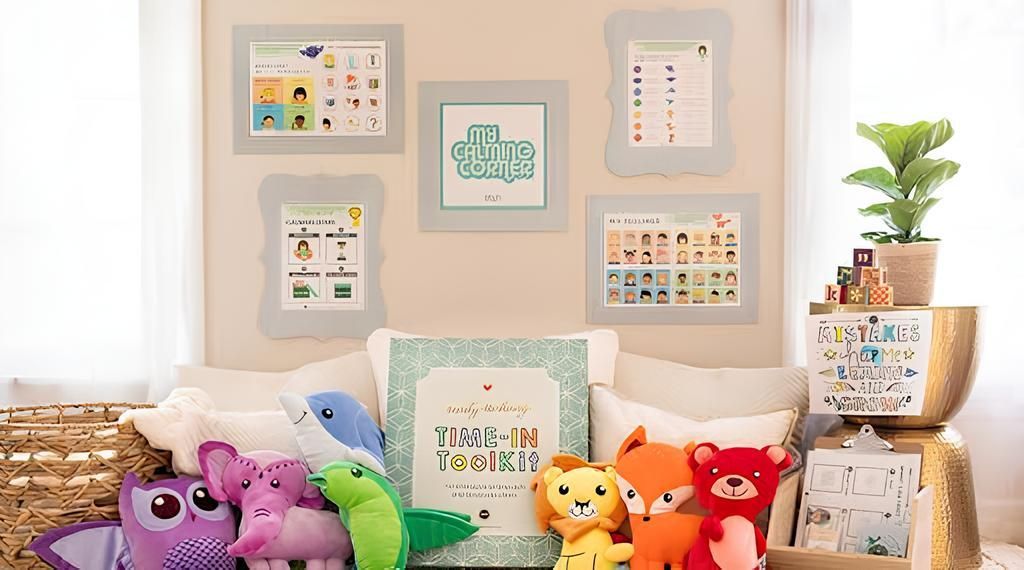
Soft, calming textures allow to regulate a child’s nervous system from emotional overwhelm. Add cosy seating such as cushions or a bean bag, soft toys for comfort, a small blanket or a weighted lap pad for grounding, and a soft rug. Physical comfort can help to calm emotions.
Emotional regulation tools
Visual aids can be used to help children identify and learn to express their emotions. Some helpful tools for this are a feelings chart, emotion flashcards, coping visuals or board with magnets and a small mirror. A mirror promotes children’s well-being as they are able to recognize their face in the reflection.
Calming activities
These redirect attention and soothe.
- Board books
- Fidget toys
- Sensory bottles
- Breathing cards
Keep choices limited. Too many items can overstimulate.
How to introduce the Calm Down Corner
Timing is everything.
Don’t introduce a Calm Down Corner during a tantrum.
When your child is calm, explain gently:
“This is your calm space. When you feel sad, mad, or overwhelmed, you can come here to make yourself feel better.”
Model its use
Pretend to feel frustrated and demonstrate calming.
Practice together
Choose to visit during neutral moments.
Normalize emotions
“All feelings are okay. We just learn how to handle them.” This builds familiarity and trust.
What to do during a tantrum
The intention of a Calm Down Corner is not to force compliance.
Stay calm first
Your regulation influences theirs.
Validate feelings
“You’re really upset.”
“I see you’re angry.”
Offer guidance
“Let me take you to your calm corner.”
“Do you want to bring your teddy and sit?”
Co-regulate if needed
Some children need a parent nearby initially.
Avoid lecturing
Logic never works when someone is emotionally overwhelmed.
Mistakes parents should avoid
Calm Down Corners can be a disaster when they turn into feeling like punishment areas. If it becomes a form of punishment, pushing a child into the corner or filling it with multiple toys may also minimize its effectiveness. It’s significant that you cannot expect immediate results, asemotional regulationtakes time to develop. Consistency is key for the space to truly work.
Final Words
Tantrums are not a parenting failure. They are opportunities to teach emotional skills that children cannot learn on their own.
A Calm Down Corner provides:
- Safety
- Comfort
- Regulation
- Independence
- Emotional growth
Start simple. A cushion, a soft toy, and a calm intention are enough.
Because what truly soothes children is not the corner itself — but the message behind it:
“Your feelings are safe here.”