How to Choose Baby Toys: A Guide for Caregivers
Choosing the right toy for an infant can feel surprisingly complicated. With hundreds of infant toys available, caregivers often wonder how to make the right choice. Buying toys for babies isn't just about picking something colourful or entertaining. Safety, developmental needs, age, interests and opportunities for interaction all play a role.
When considering how to choose baby toys, caregivers need to look beyond what catches their eye on a shelf. The right toy should be safe, engaging and appropriate for the baby's current stage of development.
Research from Child & Family Blog also explores how caregivers make decisions about the toys they buy, including the role of developmental claims and technology.
So, how can you ensure the baby toys you choose are both safe and meaningful? Let's look at what caregivers should consider.
How to Choose Baby Toys: What Should Caregivers Look For?
Before buying a toy, caregivers can start with a few simple questions:
- Is it safe for the baby's age?
- Is it suitable for their current developmental stage?
- Can the baby actively interact with it?
- Does it encourage exploration?
- Can a caregiver participate in the play?
- Can the toy grow with the baby's abilities?
These questions make it easier to identify safe toys for babies without getting distracted by packaging, trends or long lists of features.
A good toy doesn't necessarily need to do everything. It simply needs to give the baby something meaningful to explore.
1. Safety Comes First When Choosing Baby Toys
The first consideration when learning how to choose baby toys should always be safety.
Babies explore the world with their hands and mouths, which means toys need to be appropriate for their age and stage. Caregivers should check age recommendations and avoid toys with small detachable parts that could become choking hazards.
When looking for safe toys for babies, caregivers should also be aware of potential hazards such as button batteries and high-powered magnets.
For safe toys for babies, caregivers should also be aware of potential hazards such as button batteries and high-powered magnets.
The American Academy of Pediatrics recommends choosing toys that match children's developmental abilities and provide opportunities to practise new skills. Toy safety isn't something to think about after choosing a toy. It should be one of the first things caregivers consider.
2. Choose Developmentally Appropriate Toys
One of the most important factors in how to choose baby toys is understanding what a baby is currently learning to do.
For younger babies, this could include toys that encourage them to:
- Look at and track objects
- Reach and grasp
- Explore different textures
- Listen and respond to sounds
- Move their arms and legs
- Develop hand-eye coordination
As babies grow, their play changes too. They may start shaking, banging, stacking, putting objects into containers or exploring cause and effect.
That's why developmentally appropriate toys don't have to be complicated. They simply need to offer the right kind of challenge for the baby's current abilities.
3. Don't Let "Educational" Labels Make the Decision
Many infant toys are marketed as educational, developmental or designed to make babies smarter. But these labels alone shouldn't determine what caregivers buy.
When thinking about how to choose baby toys, look beyond the claims on the packaging.
Ask:
What will the baby actually do with this toy?
A simple rattle may encourage grasping and cause-and-effect learning. A picture book can encourage communication. A set of blocks can eventually support stacking, building and problem-solving.
The goal isn't to find a toy with the longest list of features. It's to find safe toys for babies that encourage active participation.
These considerations are also an important part of everyday caregiver toy decisions.
4. Look for Toys That Encourage Interaction
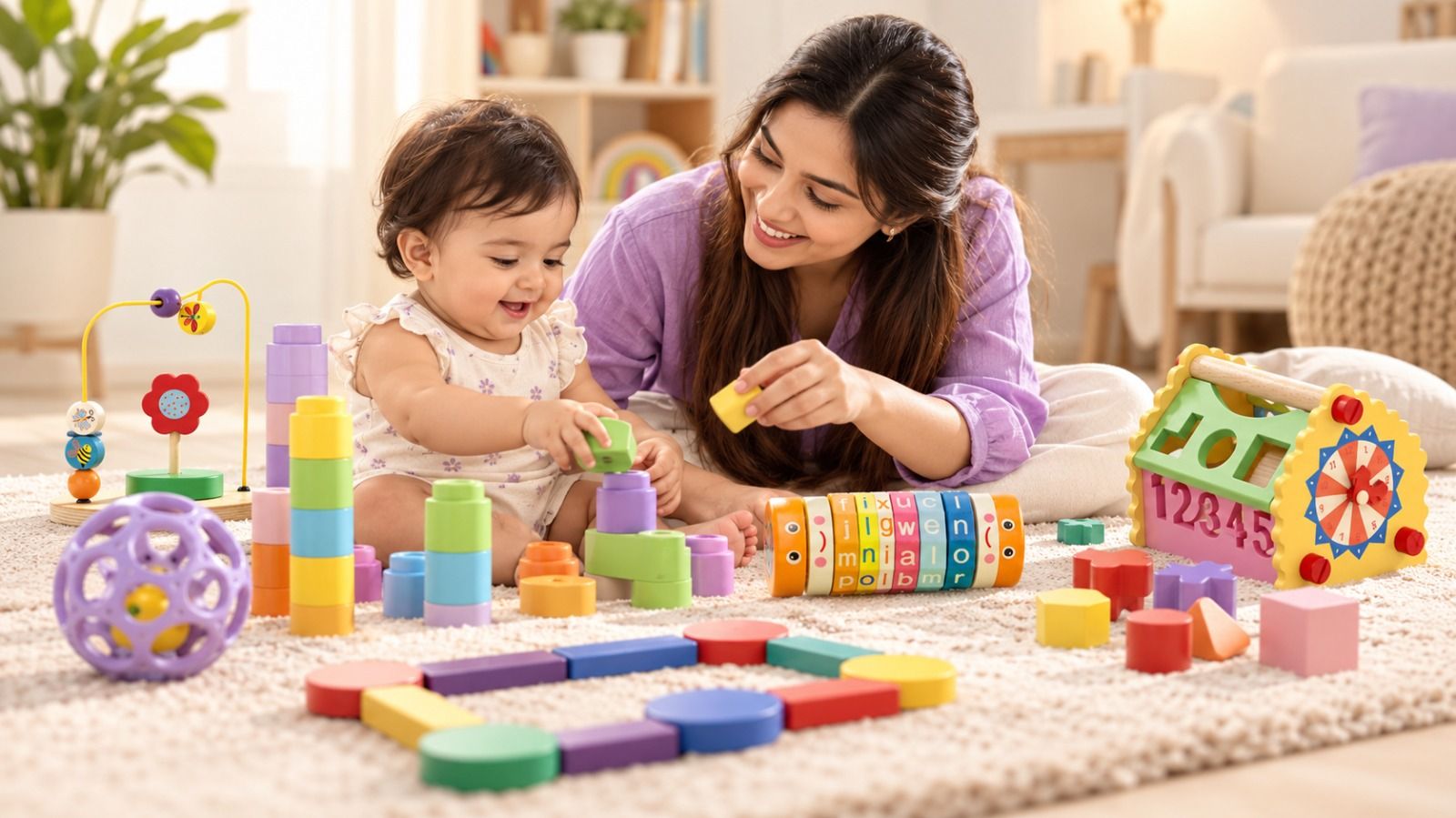
A toy can become much more valuable when a caregiver joins the play.
Talking to a baby, responding to their sounds, naming objects, copying their actions or simply following their attention can turn an ordinary play session into an opportunity for interaction.
For example, a simple picture book can become a conversation. A ball can encourage reaching and rolling. A rattle can introduce sounds and turn-taking.
This is an important part of how to choose baby toys: think about what the caregiver and baby can do together, rather than only what the toy can do on its own.
The value of many toys for babies comes from the play experience they create, not simply from the toy itself.
5. Consider Open-Ended Toys
Some toys have one obvious function. Others can be explored in several ways.
Open-ended toys allow children to experiment, discover and eventually use the same toy differently as their abilities develop.
This makes them particularly useful when choosing developmentally appropriate toys because the way a child interacts with the toy can change over time.
For caregivers, that can mean more opportunities for exploration without needing to constantly introduce something completely new.
The best toy isn't necessarily the one that does the most. Sometimes, it's the one that gives a child the most possibilities.
6. Choose Toys Based on the Baby, Not Just the Age Label
Age recommendations are important when looking for safe toys for babies, but caregivers can also observe what the baby is actually interested in.
One baby may enjoy reaching and grasping. Another may be fascinated by sounds or textures. As babies grow, their interests and abilities continue to change.
So, when choosing toys for infants, pay attention to what the baby is trying to do.
Are they reaching for objects?
Are they trying to hold and shake things?
Are they interested in putting objects together?
Are they beginning to explore cause and effect?
The answers can help caregivers select developmentally appropriate toys that encourage the skills the baby is already beginning to explore.
How Many Toys Does a Baby Actually Need?
More toys don't necessarily mean more meaningful play.
A growing collection can quickly create clutter, especially when babies outgrow toys or lose interest in them after a short period.
Instead of constantly buying something new, caregivers can rotate toys based on the child's current interests and developmental stage.
Toy rotation can make familiar toys feel new again while giving caregivers an opportunity to introduce different forms of play.
And when families want access to more variety without permanently owning every toy, a toy library can be another option.
A Smarter Way to Give Babies More Toys Without More Clutter
This is where a toy library can change the way families think about choosing toys.
Instead of asking, "Which toy should I buy and keep forever?", caregivers can ask, "Which toy would be useful for my baby right now?"
With the EleFant Toy Library, families can access different toys as their child's interests and abilities change. This means caregivers can explore developmentally appropriate toys without continuously buying and storing every toy their baby might enjoy.
It also gives parents the flexibility to introduce new experiences while keeping toy clutter under control.
For families looking for safe toys for babies and more variety without accumulating everything at home, a toy library can make playtime more flexible.
How to Choose Baby Toys: A Simple Checklist
Still wondering how to choose baby toys? Before bringing a new toy home, ask:
- Is it safe and suitable for the baby's age?
- Does it meet the requirements for safe toys for babies?
- Is it developmentally appropriate for the baby's current abilities?
- Can the baby actively interact with it?
- Does it encourage exploration?
- Can a caregiver participate in the play?
- Can the toy be used in different ways?
- Will the baby actually use it?
- Will buying it create unnecessary clutter?
This simple checklist can help caregivers make more thoughtful choices instead of buying toys based only on appearance or marketing claims.
Give Babies More Opportunities to Play, Not More Things to Store
Understanding how to choose baby toys isn't about finding the most expensive, colourful or technologically advanced option.
It's about finding safe toys for babies that match their stage, encourage exploration and create opportunities for interaction.
The right developmentally appropriate toys can give babies something to discover while giving caregivers more opportunities to participate in their play.
And because babies grow and change so quickly, families don't necessarily need to own every toy they try.
Sometimes, having access to the right toy at the right time can be more valuable than having a room full of toys.
Frequently Asked Questions About Choosing Baby Toys
Look for toys that are appropriate for your baby's age and developmental stage. Safe toys for babies should not have small detachable parts or other potential hazards. Always follow the manufacturer's safety and age recommendations.
Developmentally appropriate toys are toys that match a baby's current abilities while giving them opportunities to practise emerging skills. As babies grow, their toy needs can change too.
When considering how to choose baby toys, observe what your baby is currently learning. Younger infants may benefit from toys that encourage looking, reaching and grasping, while older babies may enjoy toys that encourage stacking, sorting, movement and cause-and-effect exploration.
Not necessarily. Simple toys can provide meaningful opportunities for exploration and interaction. When choosing safe toys for babies, focus on how the baby will interact with the toy rather than how many features it has.
Families can consider rotating a smaller selection of toys instead of continuously accumulating new ones. A toy library like the EleFant Toy Library can also give families access to variety without requiring them to permanently own every toy.