


Should You Buy a Toddler Scooter? Pros, Cons & What to Look For
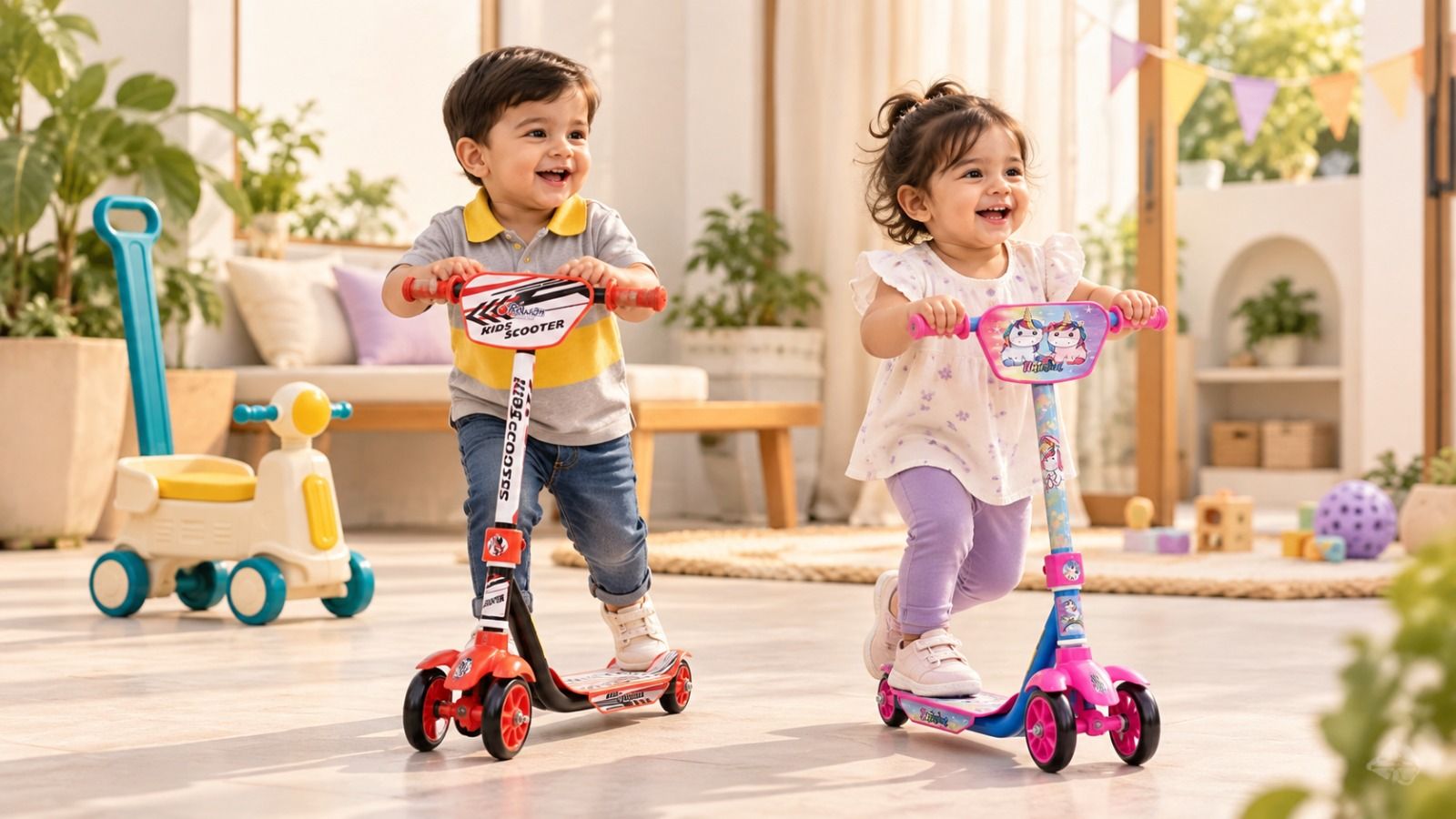
A toddler scooter can look like the perfect way to get little legs moving. It gives children something exciting to take outdoors, offers a new way to explore movement and can turn an ordinary trip to the park into an adventure.
But before buying one, parents often have questions. Is my child ready? Are scooters safe for toddlers? What should I look for in a first scooter? And will my toddler use it long enough to justify the purchase?
The answer depends on your child's age, abilities, confidence and where you plan to ride. A scooter can be a fun addition to active play, but it isn't necessarily the right ride-on toy for every toddler.
So, let's look at the benefits, limitations and what to consider before bringing one home.
Why Are Toddler Scooters So Popular?
Walk through a park and you'll probably spot them: toddlers pushing off, steering, wobbling, stopping and trying again.
The appeal of a toddler scooter is easy to understand. It gives young children a sense of movement and independence while encouraging them to spend time outdoors.
Non-motorized scooters can also be part of active play. The CDC includes riding a non-motorized scooter among examples of physical activity for young children.
But popularity doesn't automatically mean every child is ready for one.
A good starting point is to look at the child's current abilities rather than simply their age.
Can they walk and run steadily? Can they follow simple instructions? Are they interested in ride-on toys? Do they have enough balance and coordination to control a scooter?
These questions matter when choosing a scooter for toddlers, rather than buying one simply because other children are riding one.
The Benefits of Scooting for Toddlers
1. It Encourages Gross Motor Skills
One of the key benefits of scooting for toddlers is the opportunity to practise large-body movements.
Pushing off with one foot, maintaining a stable position, steering and changing direction all involve coordination and body control.
A toddler scooter can therefore become another way for children to practise movement while having fun.
The goal isn't to turn scooter time into a developmental exercise. The movement itself is the activity.
2. It Challenges Balance and Coordination
Scooting involves more than simply moving forward.
Toddlers need to coordinate their feet, body position, hands and steering while staying aware of where they're going.
A 3-wheel scooter for kids can provide more stability than a two-wheel design, making it a common option for younger riders. Three-wheel models can vary considerably, though, so parents should still check the manufacturer's recommended age, weight and use instructions.
The right first scooter should feel manageable—not like something a child has to fight to control.
3. It Gets Toddlers Outdoors
One of the simplest benefits of a scooter is that it gives children another reason to get outside.
A ride to the park, a few laps around a safe open area or a short family outing can turn into active play.
Outdoor play gives young children space to move, explore and practise new physical skills. The CDC also highlights outdoor play as an opportunity for young children to stay active and develop movement skills.
A scooter isn't the only way to achieve this, of course. Walking, running, climbing, cycling and other outdoor games can offer similar opportunities.
Are Scooters Safe for Toddlers?
This is probably the most important question to ask before buying.
Are scooters safe for toddlers? They can be part of age-appropriate active play, but falls and collisions are possible, particularly while a child is learning.
Safety starts with choosing equipment that matches the child's size and abilities and using it in an appropriate environment.
When looking for a safe scooter for a toddler, consider:
- A stable, age-appropriate design
- A wide, non-slip deck
- Handlebars that are comfortable for the child to hold
- An appropriate wheel configuration
- A manageable weight
- Clear manufacturer age and weight recommendations
The American Academy of Pediatrics recommends helmet use when children ride scooters and tricycles and stresses the importance of age-appropriate safety practices.
Where Should Toddlers Ride?
The riding environment matters just as much as the scooter.
For beginners, choose a smooth, flat and traffic-free area away from stairs, steep slopes, vehicles and crowded paths.
An adult should stay close enough to supervise and intervene when necessary.
And this is one area where toddlers shouldn't copy older children: motorized or electric scooters are a completely different category from non-motorized scooters. The AAP specifically warns against e-scooters for young children.
What Should You Look For in a First Scooter?
If you're searching for the best scooter for a 2-year-old, don't start with colour or extra features.
Start with fit and stability.
Three Wheels or Two?
For younger beginners, a 3-wheel scooter for kids can offer more stability than a two-wheel model.
Three-wheel designs commonly provide a wider base of support, while some use lean-to-steer mechanisms that allow children to turn by shifting their weight.
The important thing is to choose a model appropriate for the child's current abilities rather than buying something they will hopefully "grow into."
A Wide, Stable Deck
A deck with enough space for the child's feet can make the scooter easier to control.
A low, stable deck can also make getting on and off easier for younger riders.
Lightweight Construction
A scooter shouldn't feel like something your toddler needs an adult to carry every time they move it.
A lighter model can make it easier for a young child to manoeuvre and for parents to carry when the riding session is over.
Adjustable Handlebars
Toddlers grow quickly.
An adjustable handlebar can extend the useful life of a scooter, provided the scooter remains appropriate for the child's abilities and weight.
This is worth considering when comparing different scooters for toddlers.
The Cons: Why a Scooter May Not Be the Perfect Buy
A scooter can be fun, but there are some practical downsides.
1. There's Still a Learning Curve
Not every toddler will immediately understand how to balance, push and steer.
Some may love it from day one. Others may climb on once, wobble and decide they're done.
That doesn't necessarily mean the scooter is bad. It may simply mean the child isn't ready yet—or prefers a different type of movement.
2. Safety Requires Supervision
A scooter isn't a toy you can simply hand over and forget about.
Falls can happen, particularly while children are learning. Choosing a safe riding environment, using appropriate protective equipment and staying nearby are all part of making scooter play safer.
3. Toddlers Outgrow Things Quickly
Here's the less exciting part of buying any ride-on toy: children grow.
A scooter that fits perfectly today may become too small, too easy or simply less interesting as your child develops new skills.
And unlike a book or building toy, a large outdoor ride-on can take up considerable storage space between uses.
This leads to a bigger question.
The Seasonal Toy Dilemma
Some toys make sense to own for years.
Others are more like seasonal toys: they're exciting for a particular stage, get used heavily for a few months and then spend most of their time sitting in storage.
A scooter can fall into this category.
Maybe your toddler loves it during one season. Then the weather changes. Or they discover another favourite outdoor activity. Or they simply grow into a different type of ride-on.
Suddenly, that exciting purchase is taking up space while waiting for the next season.
So instead of asking only, "Should I buy a scooter?", parents can ask:
"Do I need to own this scooter?"
Try the Ride Without the Long-Term Commitment
This is where renting can make sense for families who want to introduce bigger outdoor toys without permanently adding them to the home.
the EleFant Toy Library offers a collection of ride-on toys that families can rent and swap as their child's interests and needs change.
The collection includes options for toddlers and preschoolers, including scooters and other large ride-on toys. It is designed around the idea of playing, swapping and moving on when a child is ready for something new.
For example, the NE SCOOTER G is a skate scooter with a wide deck and large wheels. EleFant lists it for children across the 1–3, 3–5 and 5–8 year age groups, with gross motor skills listed among its developmental benefits.
There's also the NE ROWAN TWIST SCOOTY, another scooter option with a wide deck and large wheels, listed for the same age ranges.
That gives parents something a purchase often can't: the flexibility to try, observe and move on.
If the child loves scooting, great. If they quickly outgrow it or discover another favourite ride-on, there's no need to keep a scooter permanently parked in a corner.
Buy Less, Explore More
The question isn't really whether every toddler needs a scooter.
Some children will love the freedom of scooting. Others may prefer a tricycle, balance bike, rocker or simply running around the park.
The benefits of scooting for toddlers can make a scooter a fun addition to active play, but the right choice depends on the individual child.
And when a toy is likely to have a short window of use, renting can be a practical alternative to buying.
With EleFant, families can explore ride-on toys, let their child discover what they enjoy and swap when it's time for something new.
Because sometimes the smartest way to make room for more play is to own less of it.
Frequently Asked Questions About Toddler Scooters
What age can a toddler use a scooter?
There isn't one universal starting age. Readiness depends on the child's balance, coordination, confidence and ability to follow basic safety instructions. Always check the manufacturer's age and weight recommendations for the specific scooter.
What is the best scooter for a 2-year-old?
Rather than looking for one universally best scooter for a 2-year-old, look for a model that matches your child's current abilities, size and confidence. A stable three-wheel design may be suitable for some young beginners, but manufacturer guidance should always be checked.
Are scooters safe for toddlers?
Are scooters safe for toddlers? They can be part of age-appropriate active play when children use a suitable scooter in a safe environment with appropriate supervision and protective equipment. Falls are still possible, so safety precautions matter.
Is a 3-wheel scooter better for kids?
A 3-wheel scooter for kids can provide more stability for younger or less experienced riders than a two-wheel design. However, the right choice depends on the child's development, the scooter's design and the manufacturer's recommendations.
What are the benefits of scooting for toddlers?
The benefits of scooting for toddlers can include opportunities to practise balance, coordination, movement and gross motor skills while enjoying active outdoor play.
Should I buy or rent a toddler scooter?
If you expect your child to use a scooter frequently and have enough storage space, buying may make sense. If you're unsure whether your child will enjoy it, expect them to outgrow it quickly or prefer to rotate outdoor toys, renting can offer more flexibility without the long-term commitment.