


Quick Summary
Having too many toys can overwhelm children, reduce focus, and limit meaningful play. When play spaces are simpler and toys are thoughtfully chosen or rotated, children engage deeper, feel calmer, and develop essential skills more naturally.
Too Many Toys at Home? Here’s Why It’s Affecting Your Child
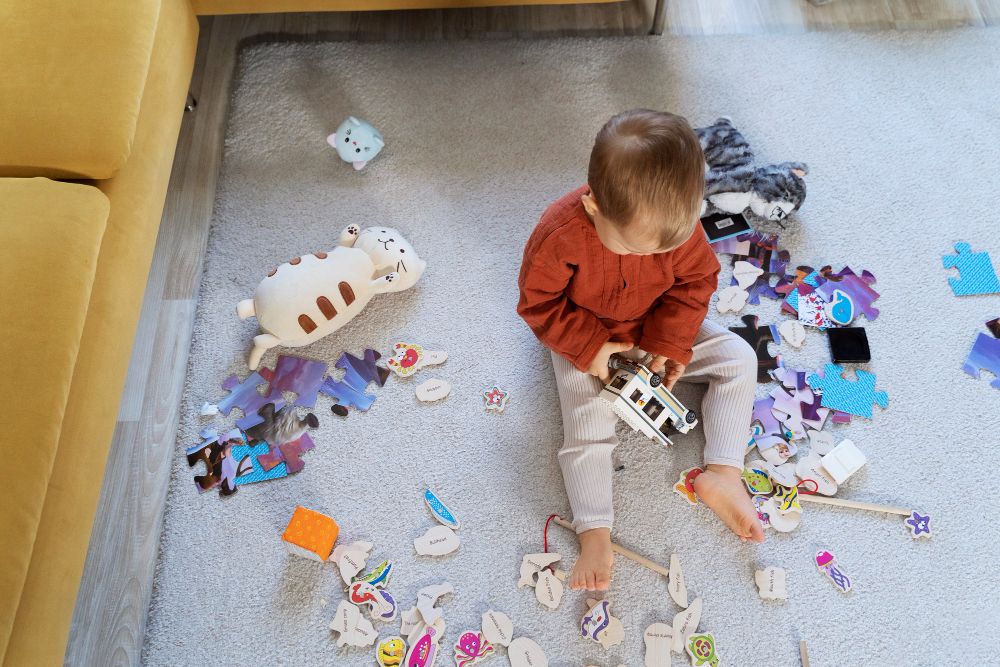
Walk into any modern home with young children and you will find the same picture – boxes of toys under the bed, shelves overflowing, baskets tucked into corners, and yet… a child saying, “I am bored.”
For us as parents, toys often mean love, learning, and happiness. A new toy feels like a promise: this will entertain my child, help them learn and make them happy. But what if the story is reversed? What if the abundance of toys is quietly affecting your child’s focus, emotions, and ability to truly play?
This isn’t about guilt or blame. It’s also about children and their world – and what less can sometimes bring to them.
The modern day toy overload problem
Today’s children are surrounded by abundance. They get toys as gifts, return presents, through online discounts, relatives, and even impulse shopping. Toys and gifts are symbols of love we exchange with our closest ones, and very often, these generous intentions end up overcrowding the life of a child. Each toy comes with good intentions, but together they create an environment that is constantly noisy – visually, mentally, and emotionally.
Unlike adults, children don’t have the ability to filter excess. What looks like “options” to us can feel like pressure to a child. When everything is available all the time, nothing feels special, and play loses its depth.
How too many toys affect your child
Reduced focus and shorter attention span
Young children are still learning how to concentrate. When dozens of toys are within reach, their brains constantly switch from one stimulus to another. A puzzle is abandoned midway because a car catches the eye. A block tower is forgotten when a musical toy lights up.
Over time, they learn to skim experiences instead of stay with them. They start to link play with instant excitement, instead of patience and effort – skills that are essential for learning, reading, and problem-solving later in life.
Less imaginative and meaningful play
Ironically, more toys can mean less creativity. When toys are too specific – press this button, hear this sound, follow this rule, children become consumers of play rather than creators.
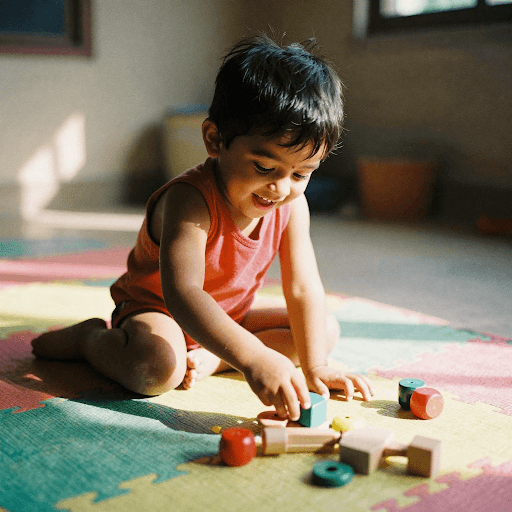
Imagination thrives in simplicity. A few blocks become a house, a road, a castle, or a zoo. But when toys already dictate how they should be used, children miss the opportunity to invent, adapt, and explore ideas on their own.
Overstimulation and emotional overwhelm
A cluttered play space doesn’t just affect the room, it affects the child’s nervous system. Too many colors, sounds, and choices can leave children feeling restless, irritable, or over tired.
You may notice tantrums during playtime, difficulty settling down, and resistance when asked to clean up. Often, this isn't misbehaviour, it’s overwhelm. Children require calm environments to regulate their emotions, just like adults do.
Difficulty valuing and caring for toys
When toys are everywhere and easily replaceable, children don’t learn to value them. Toys are thrown, broken or forgotten about not because children are careless, but because abundance teaches disposability.
Fewer toys allow children to connect with what they have. They go back to it, and take pride in it, and learn responsibility naturally.
The impact on parents and the home environment
Toy overload doesn’t affect children alone. Parents feel it too.
Constant clutter creates mental fatigue. Cleaning feels endless. Storage solutions multiply. There’s pressure to purchase “better” toys or match what other children have. And somewhere in this cycle, play becomes stressful instead of fun.
Lots of parents wonder: Am I doing too much? Or not enough?
What children really need for creative play
Children don’t need more toys – they need the right toys.
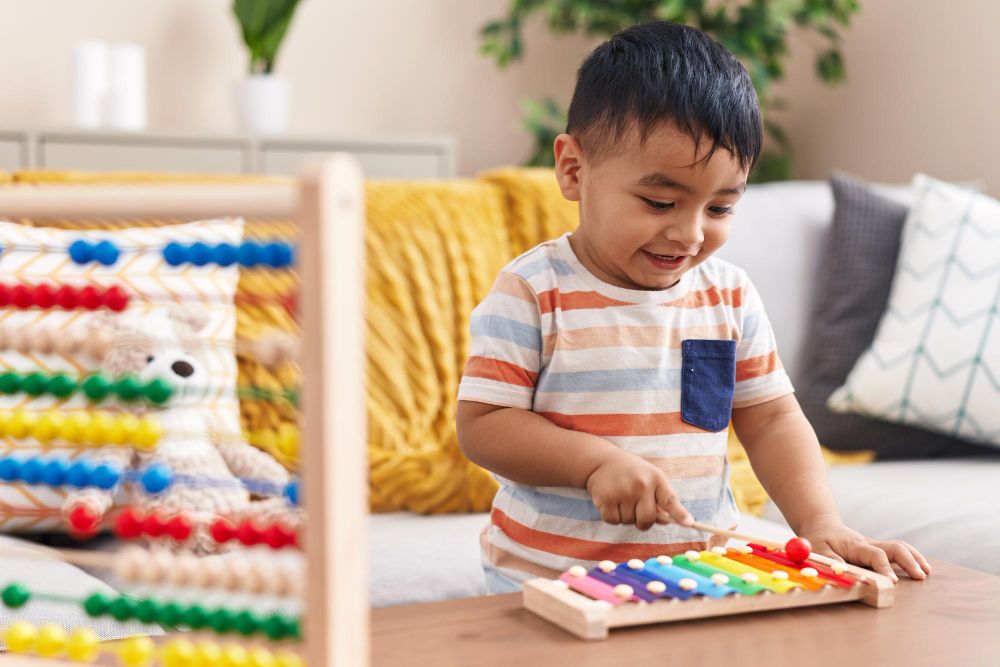
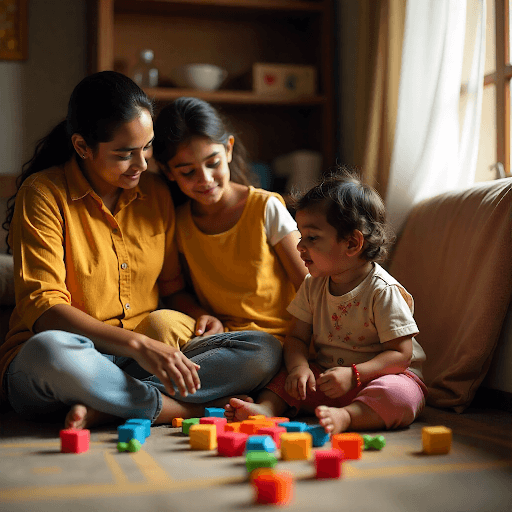
They require toys that are age-appropriate, that challenge their minds, and encourage them to explore. Toys that grow with them rather than entertain them for five minutes. They require space, physical space and mental space, to engage deeply with play.
Healthy play isn’t always flashy and loud. Sometimes it’s quiet concentration, repetition, and trial and error. These moments are where real learning happens.
The power of fewer toys at a time
When children are given fewer toys, something beautiful happens.
They play longer.
They focus better.
They return to unfinished ideas.
They become calmer and more confident.
When they have less to choose from, children feel safe to go more deeply into exploration. They don’t rush. They don’t feel pulled in ten directions. Instead, play becomes meaningful again.
This doesn’t mean removing joy; it means creating room for it.
How toy rotation makes a difference
Toy rotation is a simple concept with a powerful impact. Instead of keeping all the toys accessible all the time, parents provide a limited selection and rotate them periodically.
To a child, a rotated toy feels new again, even though it isn’t. Interest is renewed, focus improves, and clutter is reduced without permanently taking toys away.
Toy rotation supports:
- Longer attention spans
- Better problem-solving
- Reduced overwhelm
- Increased appreciation for toys
And most importantly, it aligns play with how children naturally learn, through repetition and discovery.
A smarter way to manage toys at home
One of the biggest challenges parents face is balance. Children need variety, but homes do not require constant accumulation. This is where mindful systems matter more than constant shopping.
Instead of owning everything, access is the smarter choice. It reduces waste, saves money, and helps ensure that kids always have suitable toys for their current stage, without worrying about what to do with them as they get older.
How the EleFant supports thoughtful play
the EleFant is based upon a simple yet powerful concept: children deserve the right toys at the right age.
Rather than cluttering homes with quickly outgrown toys, the EleFant provides on-demand access to a thoughtfully assembled collection that supports learning, creativity, and development without adding overwhelm or mess.
With toys that rotate out based on age and development level, little ones stay challenged while parents stay stress-free. Play becomes intentional, joyful, and meaningful again.
Signs your child may benefit from fewer toys
Every child is different, and some common signs suggest toy overload:
- Your child gets bored quickly, despite many toys
- Playtime feels chaotic or short-lived
- Toys are rarely explored deeply
- Your child constantly asks for new toys
- Clean-up time leads to frustration or meltdowns
These are not failures — they’re signs that your child might require less stimulation and more space to play.
Conclusion: Less clutter, more childhood
Childhood is not determined by the number of toys that overflow a room but by the extent to which a child can play, imagine, and grow within it.
When we shift our mindset from “more” to “meaningful,” we give children something priceless—focus, creativity, emotional balance, and the joy of truly engaging with their world.
Sometimes, the greatest gift we can offer our children isn’t another toy…
It’s the freedom to play without being overwhelmed.