
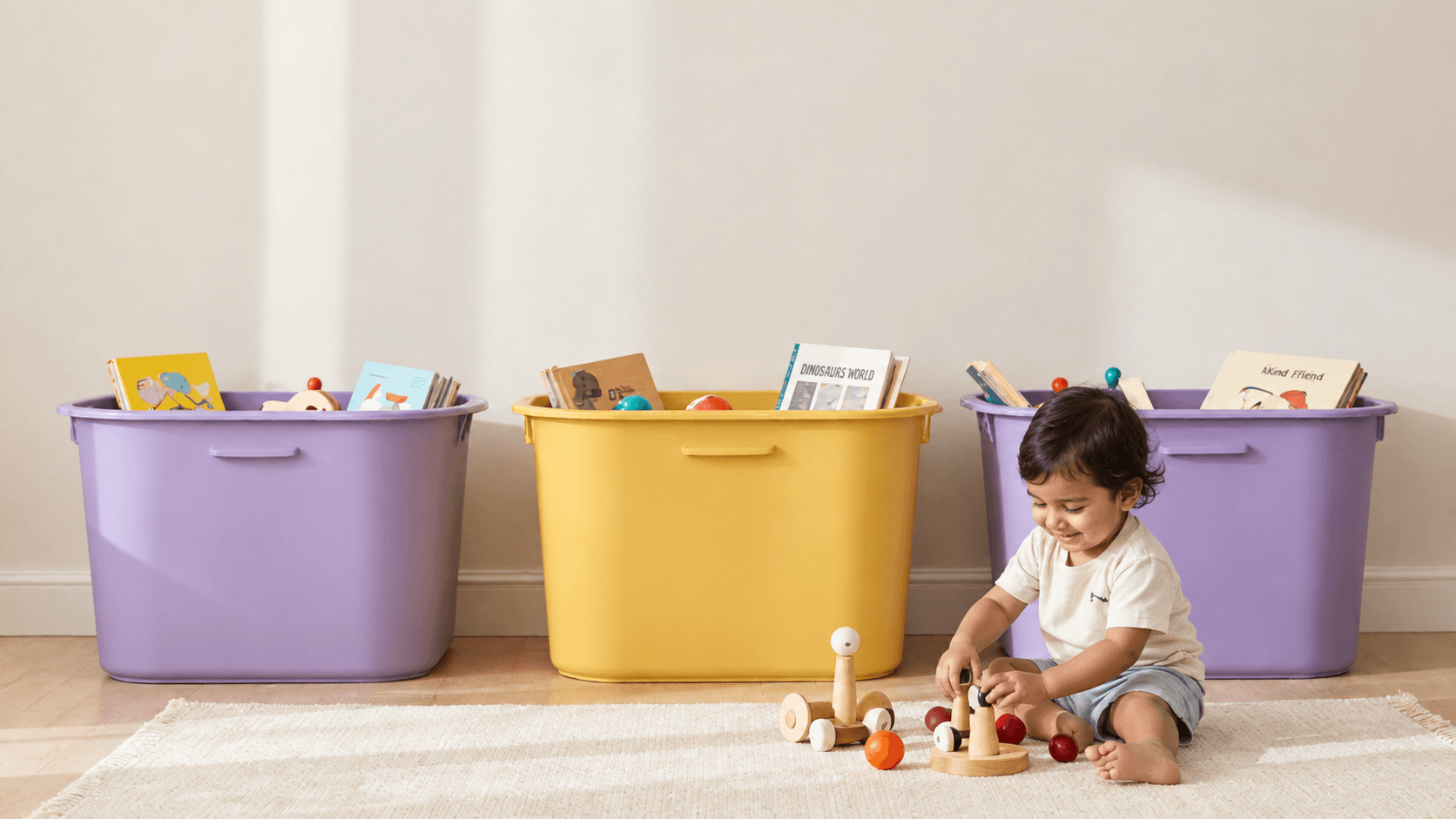
Toy Rotation: How to Set Up a Simple System at Home
If your living room looks like a toy shop exploded and your child flits from one thing to the next without ever settling, you are not alone. A toy rotation system is one of the simplest changes you can make at home, and it takes about twenty minutes to set up. The idea is straightforward: instead of keeping every toy out at once, you keep a small, rotating selection within reach and store the rest out of sight.
The payoff is calmer play, far less tidying, and a child who is genuinely excited when something familiar reappears. Here is how to build a rotation that still works a month from now, not just on the day you set it up.
Why a Toy Rotation System Works
Children play more deeply when they have fewer choices in front of them. A mountain of toys is visually overwhelming, and it makes flicking from one thing to another easier than settling into one idea. Research on play repeatedly finds that too much choice shortens attention and crowds out the long, imaginative stretches that build concentration.
Rotation solves this in two ways. First, it lowers the number of toys competing for your child's attention at any moment, which helps them focus and play for longer. Second, it creates a steady supply of novelty without buying anything new. A toy that has been off the shelf for a fortnight comes back feeling like a discovery.
What You Need Before You Start
You do not need much: three or four storage bins or baskets that fit on a shelf or in a cupboard, a marker if you like to label them, and half an hour of uninterrupted time. Clear a patch of floor, pull out every toy your child owns, and look at the whole collection honestly.
As you gather everything, sort quickly into four piles: keep, repair, donate, and bin. Broken items and anything your child has clearly outgrown rarely deserve a place back in the rotation, and this is the moment to let them go.
How to Sort Toys into Your Rotation Bins
Sort by age and interest, not by toy category. A toddler does not need a shelf of all the puzzles; they need a small mix of things that match where they are developmentally right now. Aim for three active bins plus one in reserve.
Bin 1: Current favourites
Start with the toys your child reaches for most days: a much-loved building set, a favourite figure, one well-worn book. Keep this bin small, around five to eight items. These stay out and available.
Bin 2: Developmental and challenge toys
Fill this bin with things that stretch your child just a little: puzzles, magnetic tiles, threading and lacing toys, early problem-solving games. Rotate these in when the favourites start to lose their shine.
Bin 3: Imaginative and role-play toys
This is the dress-up, play-kitchen, and small-world bin, the toys that fuel pretend play. Because these tend to be bulky, they work best as a group that comes out and goes away together.
Bin 4: The reserve
Everything else lives here, stored out of sight. This is your swap stock, and it is what keeps the system working week after week.
How to Run the Swap
Every one to two weeks, take out one bin and bring in one from the reserve. Watch what your child gravitates towards, and do not be afraid to leave a bin in play longer if it is still getting heavy use. The rhythm matters far less than the principle: a small, changing selection instead of everything at once.
As bins come back into rotation, give the toys a quick wipe so every arrival feels clean and ready to play. Cleaning as you swap keeps the routine quick and keeps hygiene off your to-do list.
How a Toy Subscription Makes Rotation Effortless
Rotation works even better when the toys themselves change, not just which ones happen to be out. With an EleFant subscription, your child receives a curated, age-appropriate set of toys delivered to your doorstep, and you swap them for something new whenever you are ready. That means the reserve bin never becomes a graveyard of forgotten plastic.
Outgrown toys go back and something fresh takes their place, so you keep the clutter-free, focused-play benefits of rotation without having to source, store, or eventually dispose of anything yourself. Access to more than a thousand premium toys and books, unlimited swaps, free deliveries, and a 100% damage waiver mean the rotation never runs dry, and nothing gets wasted.
Every EleFant toy is cleaned, safety-checked, and delivered to your door, then collected on time when you are done. The Mini Plan, for example, lets you hold two toys at a time for a year at a fraction of the cost of buying them, so the system costs less than a single forgotten toy shop haul.
Making the System Stick
Keep labels simple and let your child help choose what goes in the current bin, so the swap feels like part of the fun rather than a chore done to them. Resist the urge to add more bins, and do not reorganise the whole room on day one. A rotation that is good enough and happens every fortnight will always beat a perfect system that lasts a week.
Start With One Bin
Set up your first bin today: pull out the current favourites, store the rest, and watch how much more calmly the same toys get played with. When you are ready to make rotation effortless, subscribe now and let fresh, clean, age-appropriate toys arrive at your door on repeat.