


Some of the best memories your child will keep are not from the big days. They are from the small ones that happen again and again. The Saturday morning pancake flip. The bedtime story you always read in the same silly voice. The moment a brand-new toy arrives at the door and everyone gathers round the box.
If you have ever typed "what are family traditions?" into a search bar late at night, you are in good company. Most parents are not looking for a big production. They are looking for a warm, low-effort way to build connection and routine into a busy week. That is exactly what a family tradition is.
What are family traditions, really?
A family tradition is any activity, ritual or celebration that a family repeats on purpose, and that carries meaning for the people in it. That is the whole definition. No rules about how old it has to be, how expensive it is, or how many people take part.
It can be annual, like a birthday breakfast in bed. It can be weekly, like Friday night board games. It can be daily, like a two-minute dance before teeth brushing. What makes it a tradition is not the size of the event. It is the fact that you do it again, and that everyone knows it is coming.
Why small rituals matter more than big occasions
Big occasions are wonderful, but they come with pressure. They need planning, money and a certain amount of energy you may not have on a Tuesday.
Small rituals ask almost nothing of you, yet they do something powerful. They make the week predictable in the best way. For a young child, knowing that "after bath, we read two books together" is a form of security. It says: this is our family, this is what we do, this is where I belong.
Repetition is also how children learn. The same game played again and again builds language, turn-taking and patience. And because a small ritual costs so little, you can actually keep it going through tired days, growth spurts and the general chaos of parenting.
What counts as a family tradition?
Almost anything you repeat with warmth counts. A few common examples:
- A weekly game night or puzzle afternoon
- A "new-toy day" when fresh playthings arrive and get explored together
- Cooking or baking the same recipe as a family
- A special song, story or silly voice at bedtime
- A seasonal walk, picnic or outdoor adventure you do every year
- Sunday morning slow breakfasts with no phones
Notice how none of these require a big budget or a perfect house. They need your attention, not your money.
Frequently asked questions about family traditions
Is a family tradition different from a family custom?
People often use the two words side by side. A custom usually refers to a shared practice handed down through a culture or community, like a specific dish at a festival. A tradition can be cultural too, but it can also be something you invent yourself, just for your household. Both matter. Both can start small.
How do I start a family tradition with a toddler?
Pick one thing, and keep it tiny. Choose a moment that already happens every day, like after dinner, and add a simple ritual to it. Sing the same song. Play the same quick game. Do it for two weeks, and your toddler will start expecting it, and even asking for it. That expectation is the tradition taking root.
Do traditions have to be expensive or elaborate?
No, and the elaborate ones are often the first to fall away. The traditions that survive are the ones that are easy to repeat. A ten-minute game beats a planned outing every time, because you can actually do it on a bad day.
How often should we do our tradition?
As often as you can without it feeling like a chore. Weekly and daily rituals tend to stick best with young children, because they are easy to remember and fit naturally into routine. Once-a-year traditions are lovely, but they do less work day to day.
What if my child outgrows the tradition?
Let it grow with them. A toddler's "new-toy day" becomes a school-age child's "choose a new challenge" day. The ritual stays, the content changes. That is healthy, and it keeps the tradition alive instead of forcing a version of it your child has moved past.
Play-led tradition ideas that grow with your child
If you want a starting point that children of almost any age will love, play is the easiest place to begin. Here are three simple rituals to try.
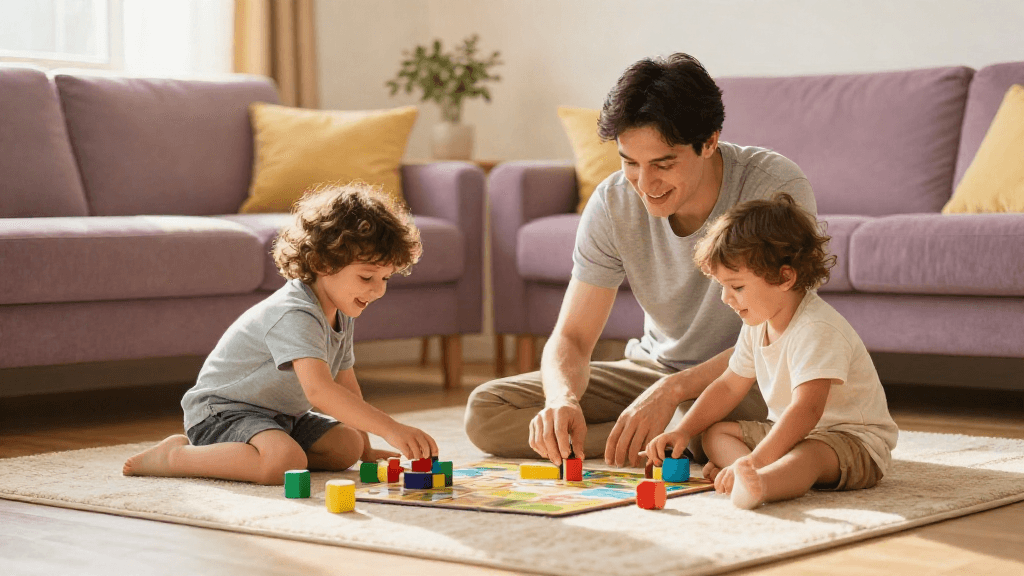
Weekly game night. One evening a week, phones away, a game or puzzle on the table. For younger children, keep it short and silly. For older ones, let them choose and even invent house rules. The point is not who wins. It is the same seats, the same snacks, the same running jokes.
New-toy day. Children adore novelty, and a fresh toy is a natural event. Make it a ritual by giving "new-toy day" a rhythm. Because the EleFant delivers a curated box of age-appropriate toys to your door and swaps them as your child grows, you can make new-toy day a monthly or fortnightly highlight without buying anything new or adding to the toy pile.
Shared cooking. Even a two-year-old can stir, pour and taste. Pick one simple recipe and make it together every week or fortnight. The mess is part of the memory.
How a rotating toy library keeps traditions fresh
The tricky part of any play tradition is keeping it new. Buy a toy, and a month later it sits in the corner. That is where a subscription toy library helps.
With the EleFant, your child gets a rotating set of sanitised, safety-checked toys and books, delivered to your doorstep, with unlimited swaps as they grow. There is no clutter to manage and no wasted spend, and every swap gives you a brand-new reason to gather round as a family.
Parents across 18+ cities already use the EleFant to keep play fresh, reduce waste and turn ordinary evenings into something children look forward to. A monthly box becomes a monthly ritual, and a monthly ritual becomes a memory they keep.
Ready to start your own new-toy day? Subscribe Now and let the next box bring your family together.