



Short Summary
- STEM builds problem-solving, logic, creativity, and curiosity through hands-on learning
- In India, it's crucial for future-ready, real-world skills
- Children can start as early as age three with simple STEM activities
- Toys like coding sets and magnetic tiles encourage sequencing and experimentation
- Renting STEM toys from the EleFant offers a cost-effective, clutter-free solution
What is STEM Education? And When Should Children Start It?
If you're a parent today, chances are that you've encountered the term STEM education everywhere, mostly in schools, toy descriptions, activity centers, and parenting conversations. Yet it all raises a straightforward, very practical question: What is STEM education, and does it really matter for young children?
This blog explains STEM education clearly and humanely. It examines why STEM learning has become crucial in India and how children can begin developing STEM skills as early as age 3, organically and with no pressure, screens, or rigid lessons.
What exactly is meant by STEM Education?
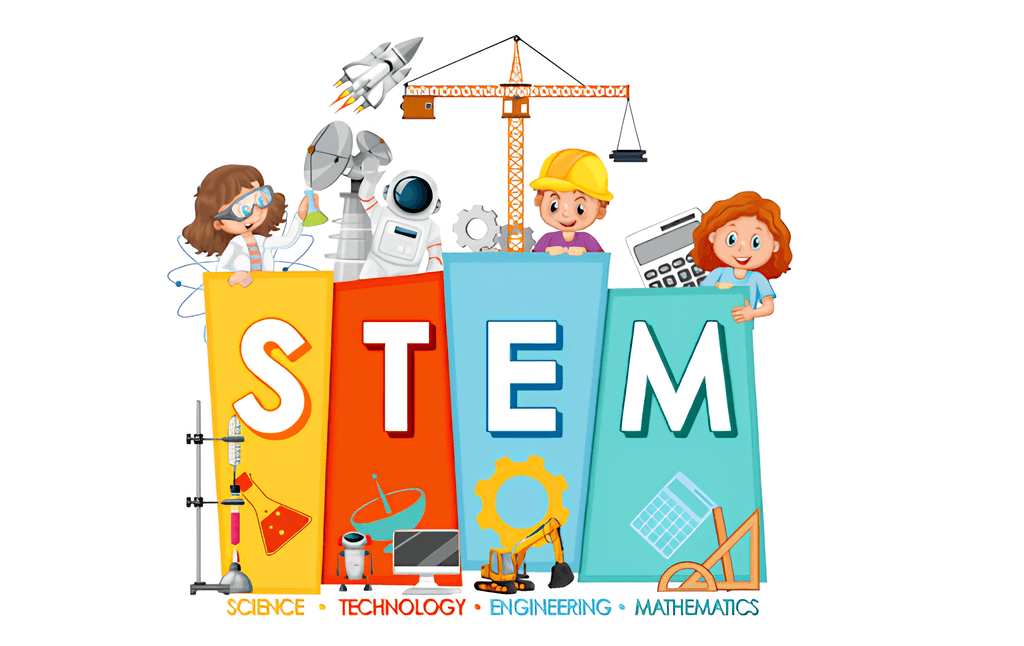
STEM is the short form for Science, Technology, Engineering, and Mathematics. But STEM education is not about teaching these subjects separately or pushing academic concepts too early. At its core, STEM education is actually about helping children to learn how to think.
When children explore, test ideas, observe patterns, and consider why something worked or did not work, they are engaging in STEM learning. When a child stacks blocks and then sees them fall, he is learning about gravity and balance. Another child trying different ways to make a structure stand is learning problem-solving and engineering. This hands-on approach is the true STEM education – learning through experience rather than memorisation.
STEM is not an additional subject added to a child's schedule. It is an approach to learning that connects curiosity, logic, and creativity.
STEM is a way of learning, not a school subject
One of the most common misconceptions about STEM education is that it occurs only in classrooms or labs. In reality, STEM learning occurs through play, everyday activities, and natural exploration.
STEM thinking is something kids practice when they're guessing what might happen next, testing an idea, making adjustments and trying again. These moments occur on the floor at home, in parks and when playing, long before formal schooling starts, if it ever does. STEM education simply supports and deepens this natural learning process.
Why is STEM Education important in India?
To understand what STEM education is and why it is important in India, one needs to look at how the world of work and learning is changing.
India has a young population and a highly competitive education system. While children work hard to score well, the future increasingly demands more than exam performance. Today's careers require flexibility, logical thinking, and problem-solving skills when challenges are new. These skills are actively supported in STEM education, as children learn to think independently rather than relying solely on scripted solutions or information.
In India, where innovation, technology and entrepreneurship are growing rapidly, STEM learning helps bridge the gap between academic knowledge and real-world application. It prepares children not just for exams, but for life beyond them.
STEM learning builds life skills too
STEM learning can also serve as a silent partner in developing skills that extend beyond academics. For children, experimenting and building teaches patience, as it doesn't always work on the first try. They discover how to cope with frustration when something falls apart or an idea doesn't work. They also gain confidence as they learn that trying again often leads to better results.
These experiences build emotional regulation, persistence, collaboration, and decision-making skills, all of which children carry with them into their adult lives.
When should children start STEM education?
STEM education does not have to wait for school. The truth is, the best time to introduce STEM learning is in early childhood, around age 3.
At this age, children's brains are developing rapidly. They are starting to learn cause and effect, identify patterns, and gain an awareness of space. Introducing STEM activities at this age just means providing play that encourages thinking, exploring and problem-solving. No lessons, no tests, no expectations, just exploration and discovery-based play.
STEM activities for kids that feel like play
The best STEM activities for kids are open-ended. They create a space for children to explore, with no predetermined outcome or correct answer. There are two gift ideas that work well for early learners. One is coding caterpillars, and the other is magnetic tiles.
Coding caterpillars
Coding caterpillars are a great way to introduce children to basic coding concepts without screens or other complications. Children are organizing pieces or buttons to direct movement, and this involves sequencing, logical thinking, and prediction. Every time they miss, they learn that their action results in a different outcome (an essential concept within technology and problem-solving).
Magnetic tiles
Magnetic tiles are the perfect toy for STEM learning because they grow up with the child. Younger children are introduced to shapes and colours, while older children explore balance, symmetry, and structure. Each build-and-collapse cycle allows children to experience success, discover cause-and-effect relationships, and learn two important habits: understanding engineering processes and building resilience.
The real challenge: Cost and clutter
STEM toys are valuable, but many parents hesitate to purchase them due to their cost. High-quality STEM toys are expensive and typically outlast children. Buying every recommended toy can lead to high spending, storage issues, and toys being left unused after a short time. This has forced many families to reconsider ownership and seek greater flexibility.
Renting STEM toys makes learning practical
Rather than purchasing toys that may be played with for only a few months, developmentally appropriate STEM toys can now be rented from toy libraries such as EleFant for your children.
Renting gives children the opportunity to play with high-quality STEM toys without committing to a long-term purchase. Toys can be rotated as the child's needs and interests change to support contemplative, meaningful play. This model helps parents cut through the clutter, save money, and keep learning age-appropriate.
STEM Is About Curiosity, Not Pressure
STEM education is not a so-called race to raise geniuses or to accelerate academics. It's about cultivating children who are at ease in thought, asking questions and exploring.
Children who learn at an early age that it's okay to make mistakes as part of learning become confident problem solvers. No matter their occupation, be it engineer, artist, doctor or entrepreneur, those thinking skills can last a lifetime.
Final thoughts
So, what is STEM education? It's a form of education that combines curiosity, logic, and creativity through hands-on experience.
What is the significance of STEM education in India? The future is for people who can adapt, innovate, and problem-solve — not just memorise.
When should children start? Beginning as early as age 3, with engaging STEM activities like coding caterpillars and magnetic tiles.
And for parents who worry about the expense or clutter, renting toys (or borrowing them through platforms like the EleFant) also puts STEM learning within reach for anyone who's keen to pursue it.
STEM education doesn't start with tests or texts.
It starts the first time a child asks himself, "What if I try this?"