



Quick Summary:
- Children grow up in an instant-gratification world shaped by screens and on-demand content
- Digital experiences reduce natural waiting moments, making patience more difficult to cultivate
- Instant rewards from apps and games condition children to expect quick results
- Fast-paced content affects attention span, frustration tolerance, and emotional regulation
- Lack of patience often appears as boredom, quick meltdowns, or giving up easily
- Patience is a critical life skill linked to learning, resilience, and confidence
- Screen-free, open-ended play helps children practice waiting and persistence
- Allowing healthy boredom encourages creativity and self-regulation
- Small daily waiting moments gradually build patience without pressure
- Parents play a key role by modelling calm, patient behaviour
Why Children Struggle With Patience in the Digital Age
Introduction: Living in an instant world
"Is it done yet?"
Seconds after parents start an activity, they hear this question. Whether it's waiting for food to heat, a game to load, or a parent to finish a call, children today find waiting extremely difficult. This isn't a coincidence or a result of poor parenting. This is part and parcel of the world they are growing up in.
The digital age has redefined speed. A world of entertainment, information, and rewards is available at your fingertips. A click delivers answers. Yes, the technology is wonderful, but it's unnoticed ways may have fundamentally altered the way a child experiences time spent on effort and waiting. Patience, once built naturally through everyday life, now requires constant nurturing.
Read:How to teach empathy to children?
Now more than ever, parents need to know why patience with children is difficult in today's world, how the digital age undermines a child's ability to develop patience (it isn't about screen time), and what we can do about it.
What is patience, and why does it matter for children?
Patience is the ability to tolerate delays, difficulties, or suffering without becoming angry or upset. Kids aren't born with patience. It is a developmental ability that grows gradually over time through multiple real-world situations.
Parents play a crucial role in a child's overall development. It helps children manage emotions and address challenges, and focus on tasks that may not yield immediate rewards. Kids who learn patience are better at focusing, have enhanced problem-solving abilities and enjoy healthier social interactions.
Without patience, everyday situations become overwhelming. Waiting turns into frustration. Effort feels pointless. Small challenges feel big. In a fast-paced digital environment, these struggles are becoming increasingly common.
The digital environment in which children are growing up
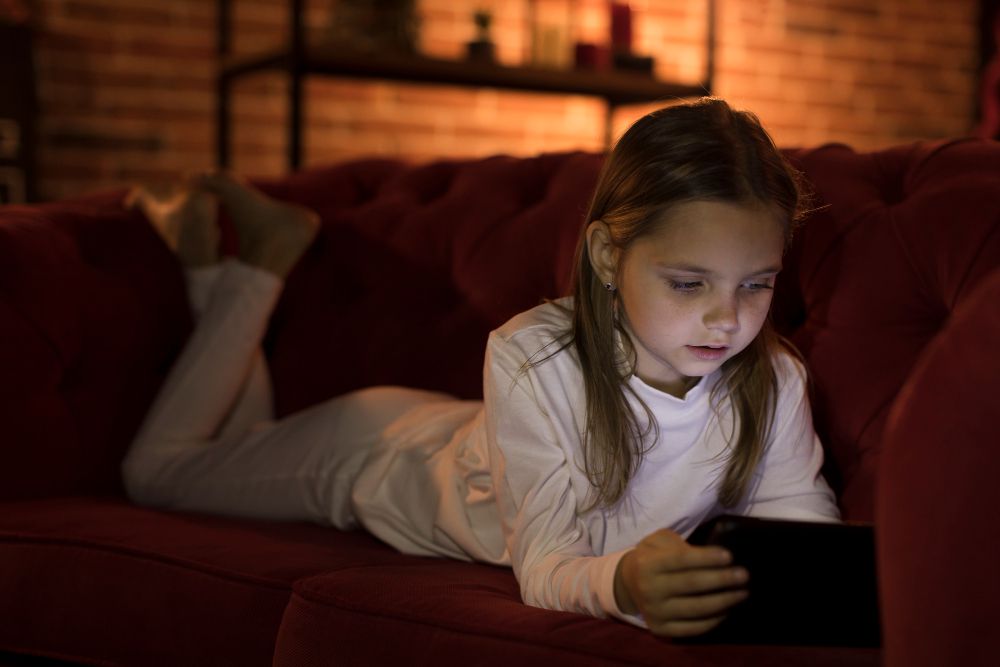
Children of this digital age are exposed to technology from birth. Screens are woven into education, entertainment, and even daily routines. Such exposure is not necessarily harmful, but it highlights how digital content is structured and can significantly shape behaviour.
The vast majority of our digital experiences are designed to be quick, pleasurable and rewarding. Videos auto-play. Games offer instant points and rewards. Apps provide immediate feedback. There is no waiting, struggling, or trying again.
As a result, children experience fewer moments of uncertainty or delay. Over time, this reduces their tolerance for waiting and weakens their ability to stay engaged when outcomes are slow or uncertain.
Key reasons children struggle with patience today
1. Instant gratification from screens
Digital platforms are built to reward users immediately.
This creates several challenges:
- Children want fast results in every aspect of life
- Tasks without instant feedback feel boring
- It's frustrating to put in the effort and not see immediate results
When a child becomes used to instant rewards, waiting for anything becomes emotionally difficult.
2. Reduced opportunities to practice waiting
In earlier generations, children waited more naturally. Waiting for cartoons to start, waiting for friends to come outside, waiting for toys to be shared. These moments quietly taught patience.
These days, many such moments of waiting have been wiped out. Children are given screens while waiting. Activities are pre-planned and structured. Boredom is quickly "fixed."
Children don't get enough practice learning patience when they rarely have to wait.
3. Dopamine loops and habit formation
Speedy digital content releases dopamine, a brain chemical associated with pleasure and reward. Each swipe or win provides a small dopamine boost.
Children become addicted to this constant stimulation. Slow activities such as reading, making, or problem-solving feel less rewarding than that. This kind of delay undermines children's ability to persevere through time-consuming or effort-demanding tasks.
4. Limited Real-World Problem Solving
Many digital experiences are designed to solve problems now. In a game, you can reverse a wrong move with a restart. A bewildering question can be answered with a few quick strokes in the search bar.
That's not how the real world works. It takes time to make something, to master a skill, or to mend a rift. If children lack real-life problem-solving opportunities, their frustration tolerance decreases and their patience declines.
How lack of patience shows up in everyday life?
A lack of patience doesn't always look dramatic. Often, it shows up in subtle, daily behaviours that parents notice but may not immediately connect to patience.
Common signs include:
- Challenges in waiting for turns during play
- Quitting immediately when something is tough
- Frequent complaints of boredom
- Emotional outbursts over small delays
- Screen play vs hands-on play preference
These behaviours are signals, not flaws. They indicate that a child needs additional support to build patience.
Why is teaching patience to kids more important than ever?
In a world designed for speed, patience has become a protective skill. It encourages children to slow down, focus, and control emotions in a fast-moving environment.
Patience contributes to success many times:
- Learning and academic growth
- Emotional resilience
- Healthy relationships
- Independence and confidence
Children who learn patience are better equipped to handle disappointment, work toward goals, and adapt when things don't go as planned.
Simple ways parents can help build patience
1. Encourage screen-free play time
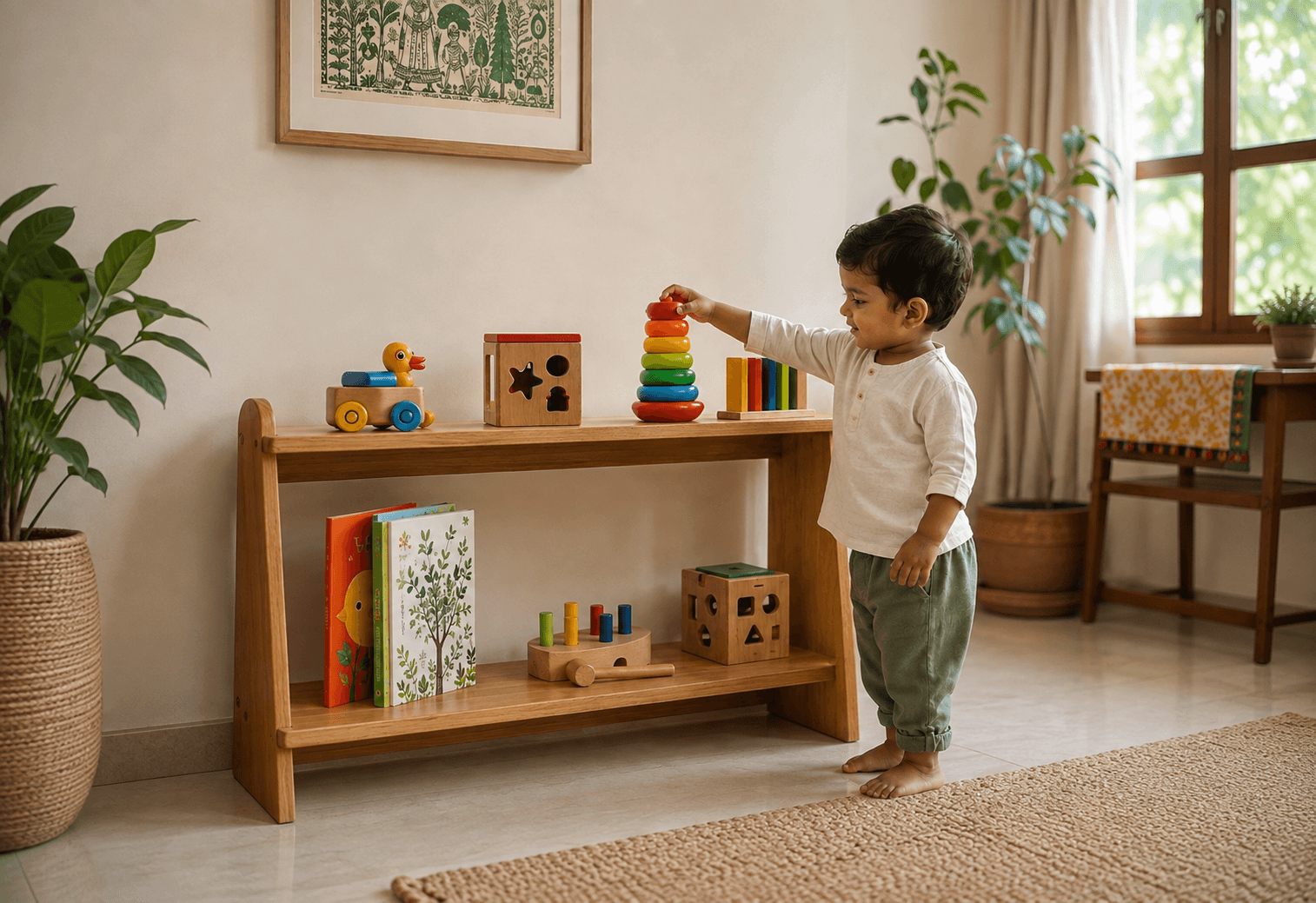
Play that's open-ended and hands-on automatically fosters patience. Children who play away from screens learn persistence, experimentation, and how to wait for outcomes.
Helpful screen-free play includes:
- Building blocks or puzzles
- Pretend play
- Art and craft activities
- Simple board games
These activities don't rush rewards. They promote a child to stay involved and to work through problems.
2. Allow healthy boredom
Boredom is not the enemy. It's a starting point for creativity and self-directed play. When children are bored, they learn to sit with discomfort and create solutions.
Rather than providing what's entertaining right away, parents can:
- Acknowledge boredom without fixing it
- Ask children to find their own activity
- Provide a safe, toy-rich environment
With time and practice, children get better at waiting and imagining.
3. Practice waiting in small, daily moments
Patience grows through repetition. Shorter daytime waiting times can also help children gradually develop tolerance.
Examples include:
- Making kids wait a few minutes for snacks
- Taking turns during games
- Delaying rewards slightly
- Slowing down daily routines
These times teach children that waiting is tolerable and will pass soon enough.
4. Model patience as adults
Kids themselves learn patience by observing grown-ups in action. When parents respond calmly to delays, frustration, or interruptions, children learn to do the same.
Helpful modelling includes:
- Avoiding constant phone use
- Speaking calmly during delays
- Showing persistence in daily tasks
Children are more likely to practice patience when they see it consistently.
The importance of playing in cultivating patience
Play is one of the most effective methods for teaching patience. Children practice working for, waiting for and reaching a goal in an organic, enjoyable way through play.
Play helps children:
- Understand that progress takes time
- Learn to retry after failure
- Experience satisfaction from effort
- Build focus and persistence
Toys and activities that require sequencing, building, or repetition help keep children engaged even when results aren't immediate.
Conclusion: Raising patient kids in an instant world
Children struggling with patience is not a reflection of poor behaviour or weak discipline. It is a natural response to a world designed for speed and instant gratification.
It's not that the goal is to eliminate technology, but to balance it with experiences that slow children down. By making way for waiting, boredom, and hands-on play, parents can help children develop patience slowly but steadily.
Small daily choices matter. All of that waiting, all those screen-free activities, all the calm replies — they accumulate. Especially in an instant society, patience has become, for parents, a gift they can intentionally give their children, one moment at a time.